History of Our Church Structure
Hurley is one of the oldest incorporated villages in New York State and the roots of the Hurley Reformed Church go back to its very beginning. Established in 1662 as the Dutch settlement of Nieuw Dorp the religious life of the village was initially served by the Old Dutch Church in Kingston with services occasionally conducted in local barns. Records are held of one such service from 1739.
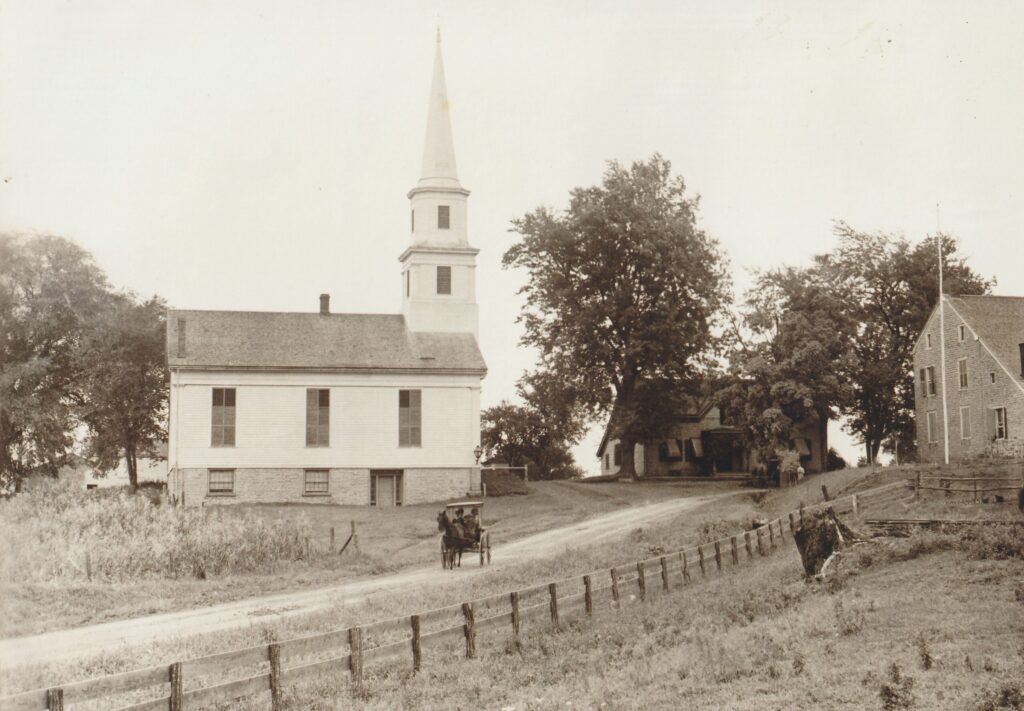
The first church structure to rise in the village itself was built in 1801. The original Hurley Reformed Church was constructed of limestone and rose sixty feet to the steeple. In keeping with Dutch Reformed custom this was topped not with a cross but a rooster. A wood stove provided heat in the winter and each pew was enclosed with a small door to conserve what warmth the parishioners could provide. Unfortunately, by 1850 the structure had developed a serious crack in its eastern wall and steps were taken to erect the ‘new’ church that still stands as a landmark at the end of Main Street.
The elements of the old church were not wasted but rather deconstructed and reused in the building of the new. Completed in 1853 the sanctuary still retains the style and simplicity of the early settlers. The sparsely decorated interior contains the building’s original pews, once rented to members of the congregation, and those pews still have doors.
Anchoring one end of our Main Street, the Hurley Reformed Church remains the center of the community. Schadewald Hall was added to the original structure in 1957 and accommodates a host of local activities to this day. Over the years the hall has hosted community lunches, dinners, concerts, basketball, volleyball, karate, tai chi and many other community based activities and organizations. The independently run Hurley Nursery School and the Ulster County Genealogy Society are also housed in the building. Improvements to better serve the congregation and community are on-going, with an elevator installed to facilitate access to the Hall and the recent addition of a back-up generator to allow for a community warming center in case of electrical interruptions. Air-conditioning is planned for the Hall and the Sanctuary in 2026.